A Bit 'o Random Musings on Politics, Religion, and Anything Else That Passes Through My Crazy Head

Tuesday, March 17, 2015

Women's History Month

March is a great month, and not just because it moves us closer to my release from busy-ness on April 15th. March is chock full of women-y things that make my feminist heart rejoice.  In the U.S., March is Women's History Month, where we remember the contributions of women in shaping America. March 8 is International Women's Day, which I first celebrated on my mission, and I love because it reminds me of all the strong, capable, spiritual women I met in Russia. March 17th brings the anniversary of the founding of the Relief Society, an organization I love and believe has so much potential to influence lives for good. And this year, the LDS church is holding its annual Women's meeting on March 28th.

The first Relief Society President, Emma Hale Smith, stated that "The object of the Society … is to seek out and relieve the distressed—that each member should be ambitious to do good." I really like that - I think that all of us can be "ambitious to do good." In celebration of all that is wonderful about women, I wanted to get the voices of more LDS women on Pinterest. Pinterest is full of inspiring quotes by male LDS leaders, but when I search for quotes by LDS women I often come up empty. So, to rectify that, I've created "pinnable" images for quotes from every general president of the Relief Society over the last 173 years - there have been 16 presidents so far.

Pin away, I say! Also, feel free to add your own favorite quotes from our Relief Society leaders in the comments below, or use Recitethis.com to create your own pinnable images.

From President Burton's 2014 address, "Wanted: Hands and Hearts to Hasten the Work"

From President Beck's "And Upon the Handmaids in those Days Will I Pour Out My Spirit"


From one of my all time favorites, "Personal Ministry: Sacred and Precious"
President Mary Ellen Wood Smoot, "Steadfast and Immovable"
President Elaine Low Jack, "Seek and Ye Shall Find"
President Barbara Winder, quoted in the book Faith, Hope, and Charity:
Inspiration from the Lives of the General Relief Society Presidents
"Ideals are stars to steer by; they are not sticks to beat ourselves with."
--Barbara B. Smith
From "A Conversation with Sister Barbara B. Smith" (I stole this one from Pinterest)
President Belle Smith Spafford, quoted in Chapter 6 of Daughters in My Kingdom
President Amy Brown Lyman, quoted in her official Bio on the church's website
President Louise Yates Robison, quoted in her official bio on the Church's website
President Clarissa Smith Williams, quoted in Chapter 5 of Daughters in My Kingdom

President Emmeline Blanche Woodward Harris Whitney Wells 
President Bathsheba Wilson Smith, quoted by Sheri Dew in "Something Extraordinary"
President Zina Diantha Huntington Young, quoted in "Great Grandmother Zina: A More Personal Portrait"

President Eliza Roxcy Snow's Poem "O My Father," currently in the LDS Hymnal as Hymn #292


President Emma Hale Smith, quoted in her official bio on the Church's website


Sunday, February 8, 2015

Shoulda Woulda Coulda (Or, Unrighteous Indignation)

Approximately 76.8% of my blog posts are inspired by things I should have said. You know the conversations - where everyone around you is of one mind on a given topic, but you think differently.  (For the record, this applies to both political conversations with my conservative friends and religious conversations with my friends of other faiths or no faith). Driving home from those conversations, I usually think up great retorts and zinging one liners to prove how wrong those people were/are. Later, after calming down and being less angry, I think of probing questions to ask that may have provoked people to think about their position and see things from the other side. Usually I simply regret that none of this occurred to me at the time of the conversation, because it's far too late now to come back and re-discuss the topic.

"Happiness is...a witty reply that totally wins the argument"
So blogging is basically my coward's way out. I get all the satisfaction of responding in just the way I like, without any of the dissatisfaction of actually having to be the voice of an unpopular minority in the conversation.  Yet sometimes I wonder, am I shortchanging both myself and my friends by doing this? An anonymous rant on the internet may be emotionally satisfying in the moment, but it's not really helping in the long term. Would it be better to speak up, however in-artfully and incoherently, and risk that we might both learn something? Maybe there are others who are silently thinking the same thing? Perhaps if I spoke, they might also be able to speak.

How do I get over my cowardice? There's a verse in the Book of Mormon, which states "Use boldness, but not overbearance; and also see that you bridle all your passions, that ye may be filled with love..." (Alma 38:12). I think this is applicable here - a balance between "boldness" or courage in your beliefs, but also without being overbearing, which the dictionary describes as "unpleasantly or arrogantly domineering." Too often, I am "righteously indignant" (especially in the zinger phase) that my friends are so wrong or narrow minded, without remembering that it's just as likely that I am wrong or narrow minded in my thinking and without remembering to love my friends. By blogging about it, I preclude responses to my thoughts that might benefit both me and my friends.

It's helpful context to know that the Book of Mormon verse above is Alma's advice to his son. Alma states further "Do not say: O God, I thank thee that we are better than our brethren; but rather say: O Lord, forgive my unworthiness, and remember my brethren in mercy--yea, acknowledge your unworthiness before God at all times" (Alma 38:14). Too often, I'm silently patting myself on my back with righteous indignation which is anything but righteous. I need to work on remembering my friends in mercy, instead of the shoulda, woulda, coulda approach of trying to zing them with my take-downs. Even if they're wrong - and let's face it, sometimes they are. But sometimes I need to be filled with love instead of anger.

Saturday, January 31, 2015

It's Important to Be [Kind]

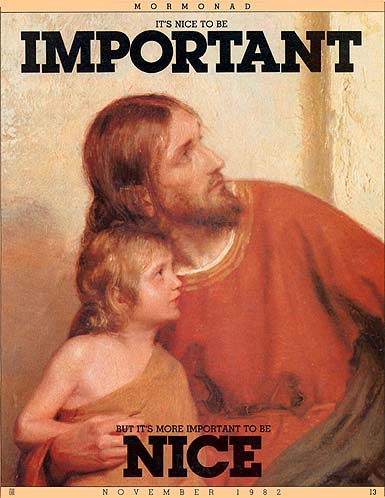
While watching the recent movie adaptation of "Into the Woods" (which was AMAZING, by the way), two lines stood out to me and I have been thinking about them ever since. When Little Red Riding Hood is saved from the Wolf, she sings a song about what she's learned, stating: "Nice is different than good." Similarly, the Witch accuses some of the other characters when they try to save Jack from the Giant: "You're so nice, you're not good, you're not bad, you're just nice." We don't typically use "nice" in a pejorative sense, but the Witch and Little Red Riding Hood seem to. Being Mormon, "nice" is kind of ingrained in us. They got me while I was young with this MormonAd:

"It's nice to be important, but it's more important to be nice" (see footnote 1)

But do we really want people to be "nice"?  Nice is different than actual charity, kindness, or empathy. Nice is a thin veneer of an outward show of respect that may or may not be truly felt. Nice is basically politeness. As Little Red Riding Hood notes, NICE is different than GOOD.  This is expressed by Chieko Okazaki, one of my favorite LDS leaders:

When the apostle Paul says, “Charity suffereth long, and is kind” (1 Corinthians 13:4), he’s not just talking about being nice and wearing smiley-face buttons. He’s talking about the core of the disciple’s life. Kindness without love is not kindness at all. It’s patronage, it’s condescension, it’s smugness and superiority. If you have been the recipient of this species of “kindness,” you know that you would much rather do without it. But with love, kindness is refreshment and rejoicing. It strengthens bonds and creates new ones. And it’s a tough, patient virtue, not a frilly, fluffy one. (Sanctuary, 75)

When we think about politics I think we sometimes want our politicians to be "nice" to each other. We want them to avoid yelling, to show that outward deference to another's point of view. But I think we may actually get condescension, smugness, or superiority to dominate our political discourse when we expect this type of behavior from our elected leaders. What we should be seeking is politicians and leaders who will risk empathy and true charity towards those who disagree with them. 

One of my friends worked for a Senator and I remember her telling me that they would get nasty phone calls from constituents when the Senator was simply talking to members of the opposite party on the Senate floor and it was on C-SPAN. She noted that it had a chilling effect on relationships between Senators. If we can't even deal with our elected officials being nice to each other, I don't know how we would handle them compromising and seeing things from the point of view of the "other"! 

Nick Kristof, a New York Times opinion columnist recently wrote about a high school friend of his who had died - I thought he made some good points about how we need empathy for those who suffer, instead of judging them. Unfortunately, reading through the comments just proved Mr. Kristof's point - many commenters did not stop to consider that they could have been in this man's place - they hadn't walked a mile in his shoes, but were perfectly willing to judge him (and by extension anyone receiving government help). Where is our empathy? Where is our compassion and kindness for those who struggle? Where is our understanding for those who disagree with our politics? I don't have answers to these questions, but I know that part of fixing our broken political system (and world) is breaking through niceness and getting to true charity for others. I just wish I knew how to do it.


Footnote 1: Note that I could go out on a whole different (feminist) rant about this MormonAd. I think it has a subtext that encourages us to be doormats and downplay our own importance. For another time...

Thursday, January 1, 2015

Read/Do/Be All the Things!

You've got to admire my consistency: I'm 100% on New Year's Resolutions this year. That is, 100% unsuccessful. Some of them I don't even remember, which is a sure sign they are unfulfilled. I started 2014 with grand plans to "make a difference" and be a better person, and don't feel like I did any of it last year. And yet, I'm planning on making New Year's Resolutions again this year. Call me an eternal optimist, but I have a much better chance of improving myself if I make concrete goals than if I have an ineffable future "aspiration."

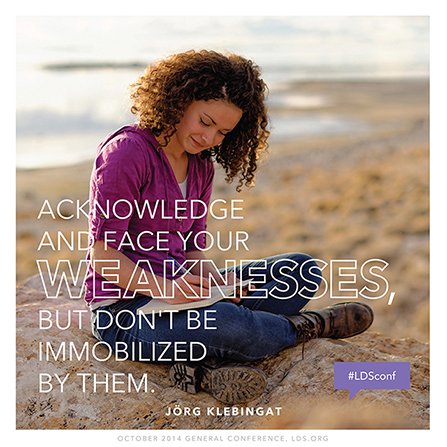
Is it a coincidence that I just typed gaol (jail) instead of goal? Sometimes goals can fence us in, but I think they represent a really hopeful view of the future, because a goal posits that we have the ability to change and become better. Goals present us with the vision of what we want to be. There's a fresh start and in a way that's exhilarating. It's much better than being paralyzed by your weaknesses.


Of course, goals are good if they lead us to greater vistas of knowledge and awareness, but they're bad when they become checklists that determine our self-worth if completed. As a wise woman once said: "Goals are stars to steer by, not sticks to beat ourselves with." Put another way, goals aren't actually about goals, they're about what the goals are leading us towards - a better and more abundant life filled with good things.

Lately for some reason I have been thinking of Sisyphus (despite the fact that I don't think I can pronounce his name correctly - hence the thinking and not the saying). Sisyphus, a character in Greek mythology, was doomed to roll a large bolder up a hill and then eternally have that bolder roll back down the hill. Kind of the definition of fruitless and pointless endeavors. Sometimes my New Year's Resolutions seem Sisyphean, especially when I realize that I am eternally rolling the same boulders up the same hills year after year. Yet, maybe that is the point. 

As an example, I usually want to spend more time reading as one of my New Year's resolutions. A few nights ago, I spent about four hours catching up on blog reading - friends' blogs, recipe blogs, Mormon blogs, news blogs, etc. For the most part, I skimmed headlines and first paragraphs, weighing in the balance whether I wanted to read the post, skip it, or save it for later. Inevitably, those posts I did read lead me to other sources and additional items for my reading/listening list. An article about tax policy lead to additional detailed statistics on poverty in America. A post about Christmas books lead to new Christmas music I want to download. Various posts on great women authors lead me to want to read more of their books and poems and life stories. 

I simply want to READ ALL THE THINGS (except maybe Ernest Hemingway), but there isn't time. Even if I devoted every waking moment not spent at work to listening to or reading books and articles, I wouldn't ever "arrive" at the destination of having read everything I want to read. So maybe the goal of reading isn't about finishing, but enjoying the journey - one that includes great literature, poetry, well written news coverage, simple updates on my friends' lives, and re-reading Jane Austen (again). There is so much to enjoy about life, and I need MORE joy, reading, fun, charity, friends, outdoors time, and family in my life in 2015, along with LESS stress, worry, self-pity, selfishness, time spent at the office, and stubbornness.

I love reading because when I read, I start making phenomenal brain connections (some of which connect politics with religion which I then proceed to poorly explain on this blog!). Other goals remind me of my ability to do hard things and help me develop into a better person. And that, dear readers, is why I keep rolling my boulders up my hills - I hope that in the journey I will see some magnificent sights from the hilltop, and develop my (emotional/physical/intellectual/spiritual) muscles. In the journey, is joy: real and tangible and hard-fought, all at the same time.

So, here are (some of) my New Year's Resolutions for 2015.  What are your resolutions?

Spiritual: Study scriptures and pray daily.
Mental: Read at least 12 new books this year.
Physical: Gym time four times a week, and an outdoor nature walk/bike ride at least once a month.
Social: Travel internationally with a friend.

Monday, December 29, 2014

If Torture is Right, Then I Want to Be Wrong

I feel a need to expand on my short post of a couple years ago regarding torture, in light of the recent release of the Senate torture report. When the report was released a few weeks ago, I happened to be traveling for work and and that meant I could watch the news while getting ready in my hotel room in the mornings. While outraged at some of the rhetoric defending the behaviors described in the report, I was also saddened by a common theme I heard from those who were against the tactics described in the report. One of the main reasons for not using the techniques was that they didn't provide valuable intelligence. In other words, we shouldn't use these tactics because they didn't work.

Wrong. We shouldn't use these tactics because they are morally wrong. Full Stop. Even if these tactics did produce good intelligence information, it is still wrong to waterboard someone or use any of the other various methods of torture described in the report. If we argue otherwise, we fail to live up to the American values we say we hold so dear.

Our 8th Amendment prohibits the use of cruel and unusual punishment - the prohibition against torture is literally part of our American constitutional values. I recognize that many of these practices came out of the fear we all experienced after 9/11. I know that fear was real, and many well-intentioned people sought to protect me, and protect my family and friends. But founding that protection on the torture of other human beings is simply wrong. I don't know how to say it any better than Senator John McCain did on the Senate floor:

But in the end, torture’s failure to serve its intended purpose isn’t the main reason to oppose its use. I have often said, and will always maintain, that this question isn’t about our enemies; it’s about us. It’s about who we were, who we are and who we aspire to be. It’s about how we represent ourselves to the world.

We have made our way in this often dangerous and cruel world, not by just strictly pursuing our geopolitical interests, but by exemplifying our political values, and influencing other nations to embrace them. When we fight to defend our security we fight also for an idea, not for a tribe or a twisted interpretation of an ancient religion or for a king, but for an idea that all men are endowed by the Creator with inalienable rights. How much safer the world would be if all nations believed the same. How much more dangerous it can become when we forget it ourselves even momentarily.


Torturing people is wrong, and we become less than we are when we engage in it. Here's the full video of Senator McCain's remarks on December 9, and you can read the transcript here.


Sunday, November 30, 2014

It (Shouldn't) Matter If You're Black or White

Sometimes when we give thanks, I feel like we become smug. It reminds me of an observation by my New Testament professor. My professor told us about a prayer said by Jewish men of Paul's time: "blessed be the Lord our God, the King of the world, that he hath made me an Israelite; blessed be the Lord, &c. who hath not made me a Gentile; blessed be the Lord, &c. who hath not made me a "servant"; blessed be the Lord, &c. who hath not made me a "woman";" (Note 1).

In other words, the prayer is saying thanks for making me so much better off than these other classes of people who have fewer rights, privileges, and blessings than I do. In a way, it's a prayer of smug self-satisfaction that pits me versus a "lesser" class (Note 2).  Contrast this with the teachings of the Paul, found in Galatians 3:28, which reads: "There is neither Jew nor Greek, there is neither bond nor free, there is neither male nor female: for ye are all one in Christ Jesus." Paul is perhaps deliberately contrasting the Jewish prayer with the gospel truth that we are all the same in God's eyes. In scripture, this concept is referred to as "God is no respecter of persons."

As humans we often don't think this way.  Perhaps we consciously or unconsciously place ourselves above or apart from other human beings. We tend to overestimate our own contribution to our success while underestimating the class, race, or other barriers standing in the way of others. Probably classic liberal guilt, but I have been thinking a lot about how privileged my life is because I am white. If you're reading this and think that white privilege is a myth, then I suggest you read the series of articles by Nick Kristof "When Whites Just Don't Get It" - the five part series can be found here, here, herehere and here. Also, I liked this recent article in the Washington Post about the difference between responsibility and culpability.

The truth is, I have enormous privileges because of my background. I was given a very big gift that I in no way deserved, while other people were not given the same advantages. Could I have succeeded if I wasn't white? If I wasn't born into a middle class family who could afford to live in a really good public school district? I like to think so, but the truth is that I might have succumbed to the whirlpool that drags so many people down - the unluckily accident of birth that places them in a situation with huge disadvantages relative to me.

I think this quote from Nick Kristof's fourth article sums it up:

We all stand on the shoulders of our ancestors. We’re in a relay race, relying on the financial and human capital of our parents and grandparents. Blacks were shackled for the early part of that relay race, and although many of the fetters have come off, whites have developed a huge lead. Do we ignore this long head start — a facet of white privilege — and pretend that the competition is now fair? Of course not. If we whites are ahead in the relay race of life, shouldn’t we acknowledge that we got this lead in part by generations of oppression? Aren’t we big enough to make amends by trying to spread opportunity, by providing disadvantaged black kids an education as good as the one afforded privileged white kids?

If you think racism in America is over, it's not. I'm sure the Jewish men who uttered the prayer I quoted above were nice people, trying to live their religion as best they could.  They probably really were grateful for the blessings and privileges they had in their life. But the problem is that they didn't look around and see that other people were oppressed. They were comfortable with their station in life, and they didn't notice that it was near impossible for others - slaves, women, outsiders, to attain the status they had. In America, it shouldn't matter if you're black or white. But it does. If you're black, you're more likely to go to a bad school, get arrested, be poor, die early, or any of a host of other bad outcomes. We need to change that.


Note 1: I think it was this prayer, I can't be certain, but the internet has provided this one in one of the commentaries on BibleHub, so let's assume it was this one. Found on the commentary for Galatians 3:28, from "Gill's Exposition of the Entire Bible."

Note 2: See also Alma 31:8-18 in the Book of Mormon - another crazy group of people thanking God that they were better than others.

Wednesday, October 22, 2014

Of Fish and Bicycles

Many years ago, I attended a temple session with my mom and some ladies from her ward as a newly returned missionary. I don't remember the circumstances, but at some point we encountered a woman who was weeping. This wasn't crying, this was weeping - soul wrenching, heart rending, true sorrow. I can't remember if she was part of our group or not, but I remember learning somehow that the reason she was weeping was because she was older and single, and felt that she wasn't likely to be married. As a 22 year old, I was a bit befuddled. Sure, most people want to get married, but I was sure that being unmarried for life was not a cause for this level of unhappiness.

After all, I had imbibed the feminist mantra that "a woman needs a man like a fish needs a bicycle." I was strong, independent, and headed for a career. I didn't feel like any of this was incompatible with marriage and family if it happened to come along, but I also didn't think marital/familial relationships were an indispensable part of my future. Surely I could be just as happy swimming along without a bicycle.

With a few more years under my belt, I can now have a bit more empathy for this unknown woman. I recently spent my last day in a typical "singles ward" - a church congregation of people who are unmarried, ages 18-31. The past few months have been much harder than my 22 year old self anticipated. While my logical mind knows that I don't strictly "need" a spouse and children, I feel like a failure when so many of my friends are married with kids.

If I'm being truthful with myself, I WANT to be married, I want kids, and it's painful to realize that those relationships are not anywhere close to becoming reality for me. There is a possibility that this is mere cultural training from years of Disney movies, romantic comedies, Jane Austen books, and church talks about temple marriage; and I realize not every LDS woman in her 30's feels the same way. I know marriage and kids can be a source of sorrow and pain too - I've seen friends go through divorces and face children's illnesses. Marriage and family is no guarantee of bliss. The thing is, I know all those things intellectually.

And yet. And yet. I want to be a wife and a mom so badly sometimes that it hurts. I know intellectually that I can have a happy and fulfilling life without being a wife and mother, but emotionally singleness really sucks sometimes. I wouldn't be the best wife and mother in the history of the world, but I surely wouldn't be the worst either. You may rightly note that part of this is my fault. Of course, there are certainly things I could and should be doing to "put myself out there" and make more of an effort. But the fact that my pain is somewhat self-imposed doesn't make it any less painful.

One of my friends from my college years would always insist when things bothered her that they didn't really bother her. It was really frustrating because things obviously bugged her (A LOT) but she wouldn't admit it or discuss it openly. Admitting I care this deeply is hard for me, especially when I weigh it in the balance of everyone else's trials - it seems like a small thing when people are starving or dealing with bigger problems. I don't want to talk about it with married friends because I don't want them to feel guilty for being married - I truly am happy for them. I don't want to discuss it with my single friends who may or may not be feeling the same way. And I don't have a solution or happy ending or any sage advice to end this post. It's just that sometimes, I want to weep, and simply be understood. And sometimes, I want to be the death-defying fish who rides a bicycle.


"Everybody Hurts," R.E.M.


Note: This blog is the closest thing I have to a journal, and I think I sometimes come across as a Pollyanna who always looks on the bright side. This post will show you that (a) that's not true and (b) I'm enormously self-centered sometimes. I had to write this post, for me, so please excuse the wallowing. I really am generally happy with my life so please don't blow this out of proportion.