A Bit 'o Random Musings on Politics, Religion, and Anything Else That Passes Through My Crazy Head

Monday, June 25, 2012

The Vocal Stylings of Mitt Romney

So I finally had to do it.  Had to watch an entire speech by Mitt Romney.  I realized I had only heard the little sound bites that they throw out on the news, but I had never listened to an entire speech from him.  Here's the one I listened to:


Things I liked:
- We will stop the unfairness of politicians giving taxpayer money to their friend's businesses.
- The part where he talks about getting to know us and what we care about (I genuinely thought this sounded  genuine).
- Being American means something different to each of us, but it means something special to all of us.

Things I didn't like (note that Democrats can be just as guilty of these):
- The implication that as president he could control the economy.  I generally don't think the president can control the economy - he (or she, someday!) can tinker at the margins, but a lot of the economy depends on larger trends beyond the President's reach.
- He spent most of his time bashing President Obama instead of expounding his own ideas.  A subset of this is that he continually implied that President Obama's views were anti-American.  It really really REALLY bothers me when politicians of any stripe accuse the other side of anti-American views.
- Running for government office while disparaging the role of government!  I mean, you are going to be the most visible member of the Federal government, yet you don't think it can do anything good?

All in all, I didn't think he was as stilted and stuffy as the media make him out to be - sure, he's not the most charismatic guy EVER, but I thought he did a pretty decent job of getting his points across without sounding like a robot.  So, have you all watched an entire speech of someone who you disagree with?

(Note: I realize this speech was short, only 15 minutes.  But, it's better than a 30-second sound bite.  I'm baby-stepping it to a full blown speech someday, maybe)

Sunday, June 24, 2012

Take This Sabbath Day

I'd like to start with a small story - we'll call it "The Parable of the Primary Manual."  Long ago, when I was a wee one in Primary (the Mormon equivalent of Sunday School for kids ages 3-12), we had a series of lessons that I had heard before.  In the LDS church, lesson manuals are standardized across the church - so a kid in Guatemala and a kid in Georgia would, in theory, have the same lesson on the same Sunday.  For whatever reason, whether travel, a blip in the schedules, or teacher error, we spent several weeks (or perhaps months) repeating lessons that our class had already been taught.  I remember thinking: "AWESOME!  I know ALL the answers!"  (Yes, I was a goody-two-shoes extraordinaire)  I was literally excited by the prospect that I would know the "right" answer to give because we had already heard the lesson.  I was probably only 7 or 8 years old, but I already thought I had the gospel nailed down - I knew the answers to the questions that would arise.  I think of this experience as a time when I knew the "right" answers without necessarily understanding them or applying them in my life.

Jesus with little children - one of my favorite Primary pictures!
Fast forward to yesterday when my brother was telling me that he was teaching a lesson on Sunday about Elder Scott's conference talk, "How to Obtain Revelation and Inspiration for Your Personal Life."  He asked me "how do you receive revelation in your personal life?"  I quickly responded "I don't" (Upon rereading Elder Scott's talk and finding that he condemned loud laughter as something that drives the Spirit away, I probably shouldn't have been so flippant about something so sacred).  But the whole question feeds into one of my constant worries about the gospel - do I know the "right" answers in theory without actually acting on them?

If you read my blog earlier this year, you'll know that one of my three goals for the year was to pray every day, both morning and night.  It's something that I know, in theory, is a good and desirable thing.  I have a testimony of prayer, that it can be an important source of inspiration, an outlet for thankfulness to God and a moment of meditation in an otherwise crazy busy life.  Yet I have trouble implementing it on a day-to-day basis.  I forget to pray in the mornings, and I often find my prayers are rote and repeating the same pleas every night, when I do remember to pray.  So I found myself in the temple celestial room on Friday night, asking in prayer for forgiveness.  Forgiveness for my forgetfulness and frailty.  It's been a week when I have felt acutely aware of the gap between my knowledge and actions.

The truth is, that I feel that my moments of inspiration and revelation are few and far between.  When I do have revelation, it is not the showy BIG kind that leads to any major flashes - it is a quiet thought or feeling that leads me in a good general direction without giving me specific step-by-step guidance.  I do wish it was more specific - that God would tell me where to work, where to be, who needed service.  But my life has just had a few times where I have felt truly at peace and 100% sure of something - most of the time I'm worried, stressed, tired, impatient, or some combination of these characteristics.  Still, the moments of peace come, and tell me I'm on the right path.

Picture of me and my Dad on my baptismal day
One of those peaceful moments was my baptismal day - now more than 20 years ago!  I remember being baptized, and then I remember as my father and other priesthood holders laid their hands on my head to bestow the gift of the Holy Ghost.  I felt such a surge of peace and love.  Similarly, when I left on my mission and was given a blessing on being set apart as a missionary, my Stake President blessed me to know that I was in the right place - something I had been worrying about and was a small bit of personal revelation.  I hope I am always able to remember those moments, and I will re-commit to try to have more of them.

However, I think I will always struggle with the tension between "knowing" the right answer and "doing" it.

Monday, June 18, 2012

Of Puritans and Parallelograms

I know what you're thinking - what do religious movements of the 16th and 17th century have in common with geometric shapes?  Hopefully I can explain what's going on in my head on this topic.
(Puritans.  Duh!)

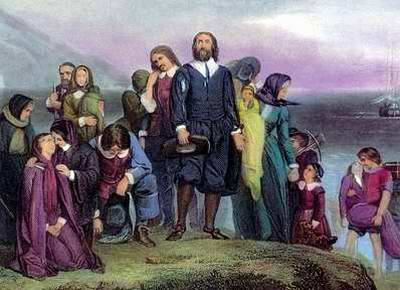
Here's what I remember from my 11th grade US History class about Puritan theology (and apologies to my teacher, who probably taught me to know better).  Puritans were believers in predestination and election.  There were certain signs whereby you would know if you were destined to be saved or not.  So, if you were blessed by God, that was a sign you were called to be saved.  None of your actions could affect your eternal destination.  The example I remember is that if your house caught fire, puritans believed that was a sign you were not predestined to be saved.  In my mind, this is taking true principles and turning them on its head - we do believe that blessings come from God, but if blessings are withheld you can't then condemn that individual as unrighteous.  Likewise, if something unfortunate happens to a person, that does not necessarily mean they deserve it.

Christ taught this principle in John Chapter 9 when he and his disciples saw a blind man and the disciples asked "...who did sin, this man, or his parents, that he was born blind?"  Christ answered that neither had sinned!  Just because sometimes misfortune is the consequence of sin, does not mean that all misfortune is the consequence of sin.  This can be aptly expressed in the phrase: "all squares are rectangles, but not all rectangles are squares."  Thus, bad choices never really lead to lasting happiness, but sometimes even good choices can lead to unhappiness in life.
(and yes, I am enough of a dork to love this chart)

I've been noticing recently how we tend to ascribe the worst characteristics of humanity to those people we don't value.  This is easier to do if you assume that they deserve their fate - it's much easier to dismiss people as worthless if they are lazy shiftless bums. This has been most noticeable recently in the effort to require drug screening of welfare recipients in several states. This seems to assume that maybe, because some welfare recipients have used drugs, they all must use drugs. So this becomes an excuse to invade their privacy and assume the worst about the most needy people in our society.


The Daily Show with Jon StewartMon - Thurs 11p / 10c
Poor Pee-Ple
www.thedailyshow.com
Daily Show Full EpisodesPolitical Humor & Satire BlogThe Daily Show on Facebook


Frankly, this assumes that those who are unfortunate deserve to be unfortunate, and we shouldn't help them. It's antithetical to one of my favorite scriptures in Mosiah 4: "Perhaps thou shalt say: The man has brought upon himself his misery; therefore I will stay my hand, and will not give unto him of my food, nor impart unto him of my substance that he may not suffer, for his punishments are just— But I say unto you, O man, whosoever doeth this the same hath great cause to repent; and except he repenteth of that which he hath done he perisheth forever, and hath no interest in the kingdom of God."

Now, I'm adult enough to realize that we don't live a theocracy, and I can't impose my religious will on the people (also, I am trying not to assume that there is only one right answer here, and leave room for dissent).  But I think a little charity could go a long way in politics - don't assume that because some poor people are poor because of bad decisions, that all poor people deserve to be poor.  Let's remember the principle of innocent until proven guilty.

Monday, June 4, 2012

Grammar Nazi

One of my least favorite grammar mistakes is when someone says "Me and Joe" when they should say "Joe and I."  Yet, somehow I really LOVE this song.  Enjoy, even if it should be "Paul Revere and I"!

Monday, May 28, 2012

In Memoriam

I've been thinking about what "remembering" does for us.  Memorial day started as a way to remember both the Union and Confederate soldiers who had fallen during the civil war.  I think that's a powerful statement about remembering the cost of war for both sides - a way to find the common humanity and realize that your enemies felt the pain of losing loved ones, too.

Remembering those who have fallen in the service also honors the values that led to that sacrifice - it honors courage, bravery, and selflessness.  I think it's great when our society can recognize those values as good.  I read this poem for the first time this weekend - it's part of what inspired the holiday we know as Memorial Day.

The Blue And The Gray
Francis Miles Finch (1827-1907)

By the flow of the inland river,
Whence the fleets of iron have fled,
Where the blades of the grave-grass quiver,
Asleep are the ranks of the dead:
Under the sod and the dew,
Waiting the judgment-day;
Under the one, the Blue,
Under the other, the Gray

These in the robings of glory,
Those in the gloom of defeat,
All with the battle-blood gory,
In the dusk of eternity meet:
Under the sod and the dew,
Waiting the judgement-day
Under the laurel, the Blue,
Under the willow, the Gray.

From the silence of sorrowful hours
The desolate mourners go,
Lovingly laden with flowers
Alike for the friend and the foe;
Under the sod and the dew,
Waiting the judgement-day;
Under the roses, the Blue,
Under the lilies, the Gray.

So with an equal splendor,
The morning sun-rays fall,
With a touch impartially tender,
On the blossoms blooming for all:
Under the sod and the dew,
Waiting the judgment-day;
Broidered with gold, the Blue,
Mellowed with gold, the Gray.

So, when the summer calleth,
On forest and field of grain,
With an equal murmur falleth
The cooling drip of the rain:
Under the sod and the dew,
Waiting the judgment -day,
Wet with the rain, the Blue
Wet with the rain, the Gray.

Sadly, but not with upbraiding,
The generous deed was done,
In the storm of the years that are fading
No braver battle was won:
Under the sod adn the dew,
Waiting the judgment-day;
Under the blossoms, the Blue,
Under the garlands, the Gray

No more shall the war cry sever,
Or the winding rivers be red;
They banish our anger forever
When they laurel the graves of our dead!
Under the sod and the dew,
Waiting the judgment-day,
Love and tears for the Blue,
Tears and love for the Gray.

It's a common trope that "that which unites us is far greater than that which divides us."  Memorial Day is a reminder of that - that brave men and women are willing to die to protect our freedom to argue about politics, to exercise our religion, and to have our constitutional rights.  When we think back on the origins of the holiday, it reminds us that even out of a horrible and bloody civil war can come good.

Monday, May 21, 2012

What Do We Care About?

What is important to you?  What do you think about, day in and day out?  I watched part of one my favorite TV shows this morning and during work it was all I could think about!  "How will it end?" I wondered.  Yet if you asked me about the conference talk or scriptures I read this morning, I would have trouble remembering whose talk it was or any of the salient points.

When people look at Mormon society, what is it they think that we care about?  Do we care about goodness, mercy, justice?  Do we value those who are spurned by society as outcasts?  Do we realize that the whole need no physician, but they that are sick do?

When citizens of other countries look at America, what do they see?  Do they see a nation of selfish, self-serving mercenaries, looking out for number one?  What do we want them to see?

But after all, it's not about what we want to "look like" - because appearances can be faked, and surfaces can be polished to hide horrible things.  This is about what kind of nation we want to BE on the inside - deep down in our soul.  Do we want to be a nation and society that spends money on bombs, bullets, and bastions?  Or do we want to be a society that spends money on building - building people up and building something better?
World Defense Spending during 2010 (courtesy of thinkprogress.org)

How can we build people up?  By choosing to put our public dollars not into expensive weaponry systems, but into programs that serve the "least among us" - those programs that feed the hungry, clothe the naked, and liberate the captive.  We need to serve those who are physically hungry for nourishment or emotionally hungry for companionship.  We should clothe the naked who are without clothes and the naked who are without dignity or a way to provide for themselves.  We can liberate the captive in a prison built of stone or of ignorance.

WE can do this - as a society, if we choose to.  Some people think that it is forcing charity for a government to participate in programs that seek to alleviate poverty and ignorance.  But I think how we spend our public dollars says a lot about the public - what do we care about?  Do we care about the abused, forgotten, and downtrodden?  Or do we care about feeding the beast known as the defense industrial complex by throwing more and more money into defense spending?  I believe we can come together as a community and as a country to say that we want to help the poor.

Mitt Romney caught a lot of flak for saying that he didn't care about poor people.  But do you?  Do you vote for politicians and policies which build bombs or which build bridges?

One of the few things I learned in my class on Isaiah (true confession: I had a bad attitude about the teacher) was that one of the groups that Isaiah regards with the most contempt is those who do not care for the widows, the fatherless, and the poor.  Here's just one example of Isaiah's description of those who have turned their backs on God:

"Woe unto them that decree unrighteous decrees, and that write grievousness which they have prescribed;  To turn aside the needy from judgment, and to take away the right from the poor of my people, that widows may be their prey, and that they may rob the fatherless!  And what will ye do in the day of visitation, and in the desolation which shall come from far? to whom will ye flee for help? and where will ye leave your glory?" (Isaiah 10:1-3)
Or in other words, the extra money that you save by paying lower taxes will perish with you.  We should labor together to build a society that is kinder to those who are inevitably left behind by the steamroller of capitalism instead of using so much money on machines that destroy.  Well, at least that is this woman's opinion.

Monday, May 14, 2012

Goodnight, My Someone

Tomorrow I get to go see "The Music Man" at one of my favorite local theaters.  One of the many great songs from that show is "Goodnight, My Someone," which Marian sings to her unknown love.  Each of us who haven't yet found true love can relate.  So, I thought I would share it with you tonight, may you find love and hope and all the happiness you so richly deserve!


This e-card is, perhaps, a modern day version of that song:

Please...